
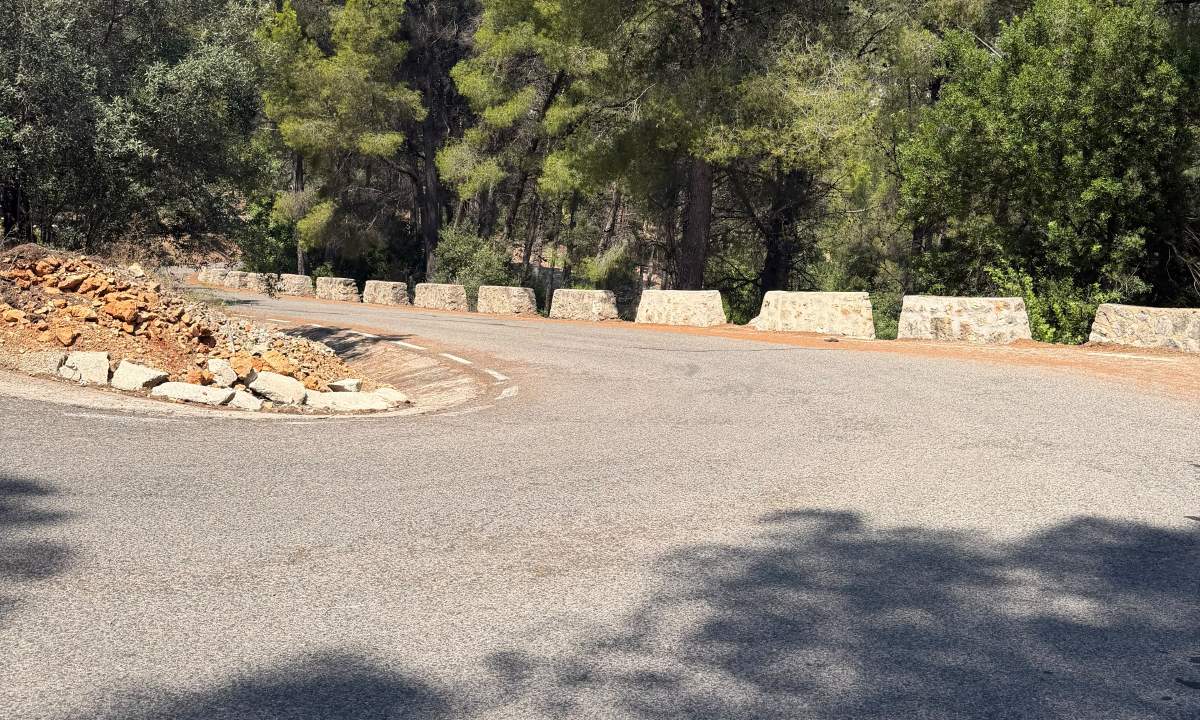
Behind the coast
The Marina Alta: fourteen places inland from the Costa Blanca
The Marina Alta is the northern comarca of the province of Alicante: thirty-odd municipalities between Dénia on the coast and the mountains behind it. Most visitors never leave the first two kilometres of it. What follows is the rest — caves, wetland, wine villages and mountain roads, all within about forty minutes of the sea.
- What it is
- The northernmost comarca of the province of Alicante
- Main town
- Dénia
- Also in it
- Xàbia, Calp, Teulada Moraira, Pego, Ondara, Pedreguer
- Not in it
- Guadalest and the Fonts de l'Algar — those are the Marina Baixa
- Best months
- March to May, and late September to November
- Getting around
- A car or two wheels; public transport inland is thin
What exactly is the Marina Alta?
The Marina Alta is the northernmost comarca of the province of Alicante, running from the coast at Dénia and Xàbia back into the mountains around the Vall de Laguar, the Vall de Gallinera and the Vall d'Ebo. Roughly thirty-five municipalities, most of them villages of a few hundred people.
One thing worth getting right, because a great many websites do not: Guadalest and the Fonts de l'Algar are not in the Marina Alta. They are in the Marina Baixa, the comarca to the south, an hour further on. Beautiful, but a different day out.
What can you do inland, away from the beach?
Fourteen places, in no particular order except that the seventh is ours.
- Barranc de l'Infern, Vall de Laguar More than six thousand stone steps through a gorge, laid by morisco villagers over five hundred years ago. A full, hard day — signed PR-CV 147 from the parking at Fleix.
- Cova de les Calaveres, Benidoleig A cave you walk into for some four hundred metres, named after the human remains found inside it in the seventeenth century. Open daily, no walking boots required.
- Marjal de Pego-Oliva Wetland between the mountains and the sea, with rice fields, birds and water so clear you can see the springs feeding it. Best early, and bring something against mosquitoes.
- Coll de Rates, Parcent The climb that draws cyclists from all over Europe in February and March. From the top you see the whole Vall de Pop laid out below.
- Montgó, Dénia and Xàbia The mountain that closes off the coast, a natural park since 1987, with paths from both sides and a summit at 753 metres.
- Penyal d'Ifac, Calp The rock in the sea. The path to the top goes through a tunnel and takes about two hours return; numbers are limited, so go early.
- A Vespa through the mountains Our own answer: back roads, small villages and a long lunch, on an automatic Vespa in a group of five at most.
- The bodegas of the Vall de Pop Xaló, Llíber, Alcalalí and Parcent have been growing moscatel and giró for centuries. Several producers receive visitors; the cooperative in Xaló sells by the litre.
- The Saturday market of Xaló Antiques at the Rastro and local produce at the Mercat de la Terra, side by side on Saturday morning by the river.
- Cova del Rull, Vall d'Ebo A show cave with guided visits, deep in one of the emptiest valleys of the comarca. Combine it with the drive over the Vall d'Ebo road.
- Dénia UNESCO Creative City of Gastronomy since December 2015, and the reason is on every menu: the red prawn from this bay is among the most expensive shellfish in Spain.
- Vall de Gallinera Eight small villages along one road, and in late February a valley of cherry blossom that draws people from the whole province for about two weeks.
- Gata de Gorgos A village that has made baskets, wicker and guitars for generations, with workshops still open along the main street.
- Cova Tallada, between Dénia and Xàbia A sea cave carved partly by hand, reachable on foot or by kayak. Access is limited in high season and has to be booked.
When is the best time of year?
March to May and late September to November. In those months the inland temperature sits between fifteen and twenty-five degrees, the light is good, and the mountain villages are not full.
July and August are hot inland — often hotter than on the coast, because there is no sea breeze in a valley. December to February is quiet and clear, and the almond blossom in February is worth a trip on its own, but a mountain morning can be genuinely cold.
How do you get around without a car?
With difficulty. There is a tram along the coast between Dénia and Alicante, and buses between the coastal towns, but inland the service is thin and Sunday is worse.
Most of the places on this page are effectively unreachable by public transport. That is part of why they stay quiet, and part of why a guided ride, a hire car or a bicycle is the realistic answer.
What is the difference between the coast and the interior?
Twenty minutes of driving and about thirty years. The coastal strip between Dénia and Calp is busy, built up and largely international. Ten kilometres inland the villages have a few hundred inhabitants, one bar, and a valley that has been growing the same three crops for centuries.
Neither is better. But if you have come for the second and are staying in the first, you have to go looking for it — nothing on the seafront will point you that way.
Questions people ask
Is Guadalest in the Marina Alta?
No. Guadalest and the Fonts de l'Algar are in the Marina Baixa, the neighbouring comarca to the south. It is an easy mistake because they appear on most Costa Blanca lists, but from Dénia it is well over an hour each way.
How far inland is it worth going?
Forty minutes from the coast takes you to the far end of the Vall de Gallinera or the Vall d'Ebo, which is about as remote as the comarca gets. Most of what is on this page is within half an hour.
Can you see the almond blossom and the cherry blossom on the same trip?
Rarely. Almond blossom is usually February, cherry blossom in the Vall de Gallinera and the Vall de Laguar is late February into March. In a mild year they overlap by a week or two.
Is it worth renting a car for a few days?
If you want to see the interior, yes. Everything on this page except Dénia itself is impractical without your own transport, and taxis from the coast add up quickly.
Last checked on .
See the interior from a Vespa
Back roads, mountain villages and a long lunch, in a group of five at most.
See our Experiences